.png "MidnightXCross")
How To Create A One Shot Manga
How To Create A One-Shot Manga
Published: August 26th, 2025

In today's tutorial, we're discussing how to create a one-shot manga or comic! A one-shot is a manga or comic in a single, self-contained volume, with no chapters. It is typically around 30 pages, but it can be longer or shorter than that. Let's take a look together and how you can create your own!
What Is A One-Shot Manga?
A one-shot manga is a short single volume manga, with no chapters. A one shot is typically around 30 pages long, and can act as a ‘pilot’ manga, usually for manga competitions or testing ideas before working on a longer series. A one shot can also be longer than 30 pages, as long as it is still a self-contained story, with a beginning, middle, and end in the single volume.
Know The Purpose
Before you begin creating your one-shot manga, know the purpose behind it.
Do you intend to create a one-shot for a competition, to test an idea, or to create a longer stand-alone volume?
When you know the purpose, you can create your story with intention.
Brainstorm
Before you begin, gain ideas on the type of one-shot manga you would like to create. I recommend reading other one-shot manga, to learn more about the style and pacing.
Research: Research other one-shot manga. Pay attention to the style of storytelling, the genre, the pacing, and the number of pages.
Read: Read a variety of one-shot manga, to learn more about the structure and style.
Imagine: As you gain new ideas, try to imagine if they would work as a simple plot with a beginning, middle, and end.
Find Your Target Audience
Know the target audience before you begin creating your one-shot. This can help your manga appeal to the right reader. Manga is usually divided into demographics, which are:
Shoujo: Shoujo is a demographic of manga, typically for a target audience of teenage girls aged 12-18. Shoujo manga usually focuses on romance and drama, and revolve around the daily life of the protagonist.
Shounen: Shounen is a demographic of manga, typically for a target audience of teenage boys aged 12-18. Shounen manga usually focuses on action and adventure, going on a quest while overcoming challenges along the way.
Josei: Josei is a demographic of manga, typically for a target audience of adult women aged 18 and over. These stories are usually more serious and mature, and focus on realistic romance, life challenges, and relationships.
Seinen: Seinen is a demographic of manga, typically for a target audience of adult males aged 18 and over. These stories focus on a more complex or mature plot, and may contain darker or more serious storylines. It usually has a more psychological focus than shounen.
Kodomo: Kodomo is a demographic of manga, typically for a target audience of children under the age of 10. These stories are light-hearted, fun, and can also sometimes be educational.
Create A Plan
Begin by planning your one-shot manga. Remember that a one-shot manga is a contained story in a single volume. Therefore, your story plan should be simple, and not too over-complicated.
To help you plan your one-shot, let’s look at the Kishotenketsu writing structure.
Kishotenketsu
Kishotenketsu is a writing structure used in Japanese literature.
KI - Introduction
Begin by introducing your main characters, the setting, and the goals of the story.
SHO - Development
Continuing from the introduction, expand on the plot points, developing it into a story.
TEN -Twist
Create an unexpected or surprising situation, in order to shift the direction of the story, or present it in a new light.
KETSU - Resolution
Finalise all the plot points, bringing the story to a resolution.
This writing structure is used to plan many one-shot manga, as it is simple yet allows for so many creative possibilities.
The One Sentence Method
A good way to see if your plot is suitable for a one-shot manga is to try describing your story in a single sentence.
For example:
The main character goes on a quest to find the lost diamond amulet, only to discover that they were deceived, and that the amulet had been hidden within them all along.
If you are unable to condense your plot into a single sentence, it might mean that your plan is too complex for a one-shot manga. In this instance, try simplifying your story idea.
Design Your Characters
Draw the designs for the main characters in your one-shot manga.
The designs and style are very dependent on the target audience you chose.
For example, a character in a kodomo manga may be more simplified and colourful, than a character in a seinen manga.

Tips For Good Design
When designing characters for your one-shot manga, there are a few techniques that can help.
The Eyecatching Element: Every character will usually have one main eyecatching element in their design. Whether it be a specific component of their outfit, an accessory, or even their hairstyle, find an element that stands out.
Personality And Purpose: A design should make sense for the character’s personality. It should also have purpose in the story. For example, if the character needs to survive in a harsh environment, they would likely wear clothes that are easy to move in, or camouflaged for their surroundings.
Silhouette: A good character always has a good silhouette. When you turn your design into a solid shape, see if your character is still identifiable. If it is, then the design is great. If not, try adding more elements to make them more recognisable.
Write A Script
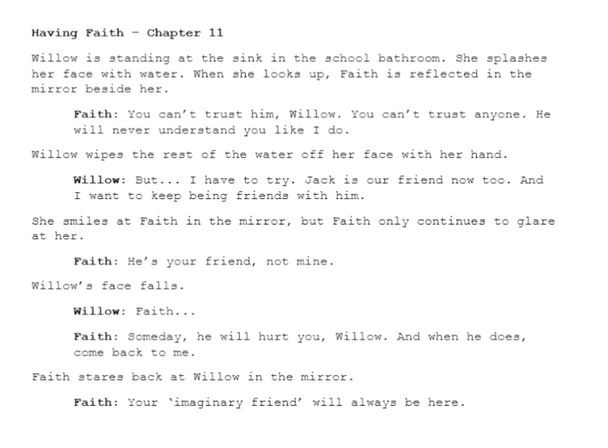
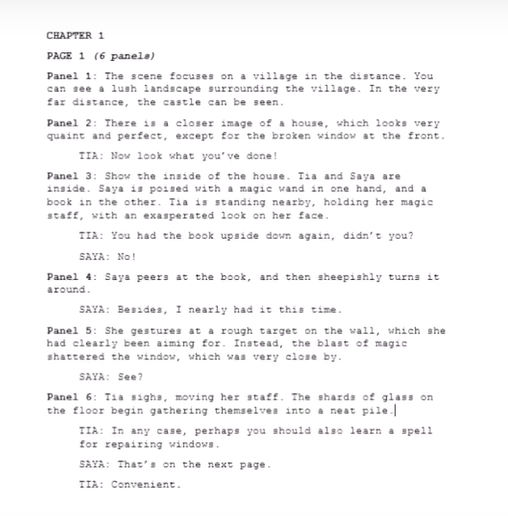
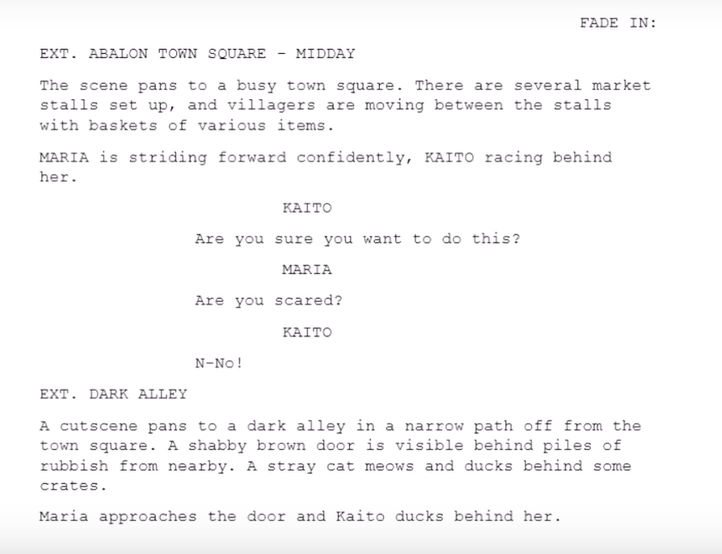
Next, write a script for your one-shot manga. The script can be as detailed, or as complex as you would prefer.
Let’s take a look at a few different script writing techniques.
Example #1
Example #2
Example #3
Storyboarding
Once you have written your script, using your preferred technique, it’s now time to storyboard.
Storyboarding is when you create a rough draft of your manga pages, in order to read it before finalising the artwork.
First, decide the number of pages you want to include in your one-shot manga. Then, sketch the panel layout, including the character placement and speech bubbles in the sketches. Write your dialogue in the speech bubbles, and read through your one-shot, so that you can adjust and make changes to the storyboards before continuing to finalise the artwork.

Finalise Your Artwork
Once you have read through your storyboards, and are satisfied with the design and layout of your pages, it is now time to finalise your artwork.
You can do this digitally or traditionally.
Traditional Manga Inking
If inking your manga pages traditionally, you will need:
An inking pen with a 0.2 nib | An inking pen with a 0.5 nib |
A mechanical pencil (for sketching) | Black pens (for shading darker area) |
| Screentones (or grey pens/pencils) | White gel pen (for highlights) |
Paper (B4, A4, or A3) | A ruler |
| Optional: Paper size chart | An eraser or correction pen |
Start by sketching the layout of your manga page, based on your storyboards. Once you have sketched your page, ink the panels using an inking pen with a 0.5 nib. Then ink the smaller details using an inking pen with a 0.2 nib. Add shading using screentones, or grey pens/pencils. You can also use crosshatching techniques to add some texture.
Digital Manga Inking
If inking your manga pages digitally, you will need:
A digital drawing software. There are
free options such as Medibang Paint or Krita, and paid options such as
Clip Studio Paint and Paint Tool SAI. There are many options other than
these, so do some research to find one that works best for you. | OPTIONAL: An image editing software such as Paint.NET or Adobe Photoshop for resizing the pages and adding text. |
Start by sketching the pages in your drawing program or traditionally. Then ink the borders with the straight line tool, and ink the smaller details with the digital inking pen. Use screentone textures to add the shading to the manga page, and add solid black shading in some areas for contrast. Once your page is complete, resize it, and add text or sound effects to finalise it.
Publishing Your One-Shot
A one-shot manga can be shared in a variety of ways. You may intend to submit your one-shot manga to a manga competition (such as SilentMangaAudition.) You may also release your one-shot online, or self-publish it in a single volume.
Or you may like to continue to create one-shot manga, to help you practise until you find the perfect idea for a longer series.


